Monday, March 2, 2026

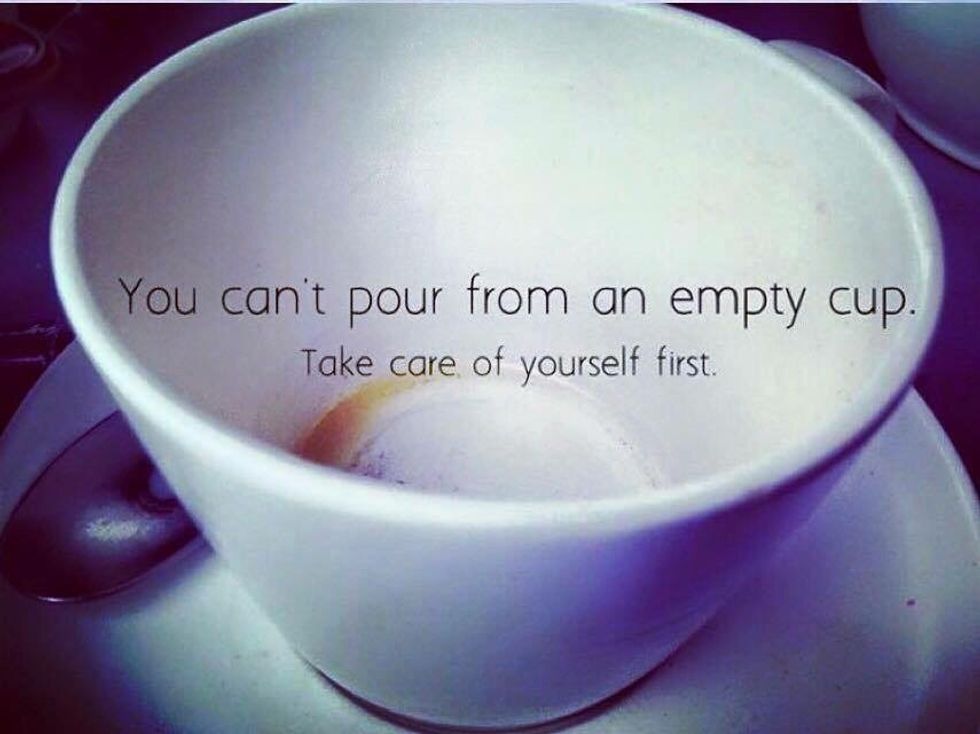
You Can’t Pour From an Empty Cup: The Reality of Compassion Fatigue


Understanding Compassion Fatigue


Compassion fatigue is real, and it’s something library workers experience all the time. When you spend your days helping others, especially those facing hardships, you give a lot of yourself. Over time, that constant emotional output can lead to exhaustion, frustration, and even questioning why you chose to do this work in the first place. I say it all the time: “Did I choose the wrong field?” I do love working in a library, but there are many times that I feel like it’s really overwhelming. So, it’s important to recognize when you’re feeling depleted, because ignoring it doesn’t make it go away.

Importance of Self-Care

I recently heard the saying “You can’t pour from an empty cup.” This saying really resonates with me and sounds all too true. It’s easy to see how library workers become overloaded and overstressed. I see it all too often in library-related email threads; so many library workers are looking to leave the field entirely, seeking roles that offer better balance and support. We don’t have to leave the library field entirely to do this. There are some ways we can practice self-care to get that better balance we’re looking for. Some of the things that can help are practicing mindfulness and setting clear boundaries. I’ve experienced this firsthand, and believe me, I wish I could go back in time and set more boundaries, but I can only go forward now, and the boundaries are up! Another big one is practicing saying no instead of always instinctively saying yes. I know this one is hard, especially for someone who wants to please everyone. In the long run, one of the best ways you can practice self-care and set those boundaries is practice saying no. I know it can be hard to say no, but you've got to at least try to say no sometimes.

Another important thing I’ve learned along the way is that a daily self-care routine helps you recharge, stay balanced, and manage stress more effectively. If you can prioritize even a few small self-care habits each day, it can make a big difference in your mental, emotional, and physical well-being, or from a holistic perspective, mind, body, & spirit. Some simple self-care activities I’ve tried to incorporate into my day are journaling my thoughts, going for walks outside, and engaging in a hobby that I love. Another important one is taking time to hydrate and nourish your body. The key here is consistency. Remember that small, intentional acts of self-care add up over time and help you to be healthier, happier, and more resilient.


Navigating the Challenges & Finding Balance


Despite the hard days, many of us stay in this field because we believe in what libraries stand for and we love working with our patrons and our communities. We know the difference libraries can make in people’s lives, and that’s what keeps many of us going. So, here’s what I think will help us to continue doing this work in a way that’s sustainable. We have to take care of ourselves; actually, this is a must! This means setting boundaries, knowing when to step back and say no, and try this one out too, let’s lean on our coworkers and our support systems when we need to. We’ll talk about support systems later in unit four. Here’s another one I fit in quite often—take time off when you need it. This is practicing self-care even if it’s just one day or a half day. This time off is essential in order to refresh and recharge, especially if you are feeling overwhelmed.

Acknowledging Library Work

We all know that library work is important and very meaningful, but we also know that it can be emotionally draining and demanding. Here’s what we can do. We can acknowledge that there are hard parts to library work, but that doesn’t mean that we don’t love the library. We still do. It just means that we need to be honest about the demands and know what we need to do to take care of ourselves.

I’d like to share something that has always been helpful for me. It's talking about my library experiences with other library workers and trusted family members. Whether it's wild stories that happen in the library or sweet stories about helping patrons find books, or even difficulties with other workers or upper management, it really helps to share your experiences. Many times I have felt my passion for libraries falter when something unheard of happens at my library. After talking about it, I feel a lot better, and my passion for my work can be reignited, but sometimes it takes time.

Taking time for yourself and practicing self-care is not selfish. The main key point is that we have to remember that self-care is a necessary element that we need in our lives to thrive.

The more we talk about the challenges of library work, the more we can support each other. One of my goals is to bring library workers together to create a self-care revolution where we all support each other. We have to remember that we are not alone in this work, and we don’t have to navigate it alone or in isolation either. Together we are stronger. By coming together and sharing our experiences and prioritizing our self-care, we can become stronger and more resilient. Send me a message if you're interested in chatting 💛

We're in this together,

the Compassionate Librarian


All images used in this section are licensed through iStock by Getty Images

Saturday, September 13, 2025

From Writing to Storytelling: How One Group Found Their Voice

I’ve been doing a lot of research on intergenerational literacy and oral history and researching ideas like Gentelligence and exploring how different generations communicate, preserve stories, and pass on traditions lately. Along the way, memories of my own experiences keep bubbling up, reminding me why understanding intergenerational literacy and keeping storytelling alive is so important.

One memory in particular that came back to me was from about a year ago. It was a difficult time for me because my writing group that I had been hosting at the library for several years fell apart. I was saddened by the ending of this group because it had been so magical. Well, in true Compassionate Librarian form, I wanted to keep the magic going, so I found myself starting something new: a storytelling circle. I am someone who loves stories. I am surrounded by books all day, every day, I find myself drawn to stories in every form. 

So I leaned into what I know best: talking to groups and sharing stories.


Our very first gathering centered around banned books. I wheeled in a full cart of titles from the Top 10 Challenged list, and what unfolded was magical. Each person had a personal connection to a book on that cart. I read this in high school. I found this during a difficult time in my life and it comforted me. This was my favorite story growing up. What began as a discussion of censorship quickly became a circle of memories, reflections, and laughter.

As we talked, connections emerged. I could see it wasn't just between people and books, it was clearly between multiple generations sharing stories that are valuable and meaningful. We found ourselves reflecting on how stories shape identity, comfort us in hard times, and offer perspectives that sometimes scare the world enough to be challenged. We realized that among all of our collective memories there are many stories worth telling.

That day, this new group bonded. We decided to meet monthly and share stories, memories, and carry on oral traditions. Family, holidays, ghosts, places we grew up, the conversations all just flowed naturally, weaving together threads of lived experience that transcended beyond anyone's age or background. The ages spanned from teens to seasoned adults. 


Looking back now, I see that what began as the end of one group became the beginning of a new kind of community. Just like Djo’s song End of Beginning, we found our group in another version and we were in it. We were definitely in it. All we needed was a space to talk, to listen, and to honor the stories that connect us across generations. It was so amazing!

Sometimes, when writing fades, storytelling finds its voice and I want to give tribute to this group for bringing back the art of storytelling and preservation the tradition of oral history. 


Until next time,

the Compassionate Librarian

Tuesday, September 2, 2025

What Library Outreach Means — And Why Equity Must Lead the Way

The New Era of Outreach

Outreach has always been important in library work, but since the pandemic it has taken on an even more critical role. The challenges of COVID-19 exposed inequities that were always there: the digital divide, the lack of access to reliable health information, the isolation of seniors, the struggles of unhoused community members, and the barriers faced by immigrants and refugees.

Libraries stepped up in new ways by offering Wi-Fi in parking lots, creating curbside services, helping people sign up for vaccines, and providing phone check-ins for seniors who couldn’t come in. These weren’t extras. These were and still are essential resources. Outreach has become the heartbeat of library service, and if we are truly committed to equity, we can’t treat it as optional.


What Outreach Really Means

When many people hear the word outreach, they picture taking programs outside the library walls — a storytime in the park, a table at a school fair. And yes, those are important. But outreach goes deeper.

At its core, outreach is about meeting people where they are. It’s about listening to communities, learning what barriers they face, and connecting them with resources that make a difference. It’s not about what we think people should want — it’s about asking, What do you need? How can we help?

Outreach is, at its heart, relationship-building. It’s not transactional. It’s about trust, compassion, and consistency.

Equity Must Be at the Center

Outreach without equity risks overlooking the very people who need us most. If we only plan programs for the people who are already comfortable walking into our buildings, we’re missing entire communities.

Equity-driven outreach asks harder questions:

  • Who is excluded?

  • Who feels invisible?

  • Who can’t access our services — and why?

When we place equity at the center, our focus shifts to vulnerable and underserved groups: unhoused patrons, seniors, LGBTQ+ teens, English language learners, immigrants and refugees, people with disabilities, rural communities, and families living in food deserts and many more vulnerable or invisible community members.

Equity-driven outreach means rethinking not just what we do, but who we design for — and whether our services are reaching those who need them most.

                                         Contra Costa County Library's Rolling Reader


Equity in Action

Examples of equity-driven outreach are everywhere if you know where to look:

  • A seed library or community garden project in a food desert.

  • Partnering with social service agencies to help unhoused patrons apply for housing or access healthcare.

  • Creating bilingual storytimes and programs co-designed with immigrant families.

  • Hosting resource fairs in neighborhoods far from the nearest library branch.

At Concord Library, one of the ways we live this out is by providing outreach at the local warming shelter. During the coldest months of the year, our staff bring library resources, conversation, and connection directly to unhoused patrons who are seeking warmth and safety. It’s not just about handing out books — it’s about showing up, being present, and reminding people that the library sees them, values them, and is part of their support network.

The Role of Relationships and Trust

Equity-driven outreach something we do to engage with our community members that aren't always visible. We have to step outside of the library walls and this work many times requires cultural humility: listening first, respecting lived experiences, and being willing to learn.

It also requires partnerships. Schools, nonprofits, shelters, faith-based groups, advocacy organizations, and healthcare providers are often already serving vulnerable populations. When libraries join forces with them, we amplify our collective impact. Outreach succeeds not through one-off programs, but through relationships, trust, and collaboration.

Shifts in the Profession: Outreach Roles Are Growing

The profession is catching up to this reality. More and more libraries are creating positions like Outreach Librarian, Community Engagement Specialist, and Equity Coordinator. These roles reflect the understanding that outreach isn’t a side project — it’s specialized, intentional work that requires creativity, empathy, and strategy.

For those entering the profession or looking to grow in their careers, these roles signal a shift: libraries are investing in outreach as a core part of what we do, not an optional add-on.


The Bigger Picture: Outreach as Transformation

Outreach is not “one and done.” It’s not a single program or a single season. It’s long-term change work.

When libraries commit to equity-driven outreach, we transform ourselves as much as our communities. We become spaces of belonging. We become places where compassion isn’t just a value on a poster but something people experience in action. We become connectors, advocates, and allies.

Outreach Matters

Outreach has always mattered, but in our post-pandemic world it has become more urgent and more powerful than ever. Libraries that lead with compassion and equity will not only meet needs — they will create lasting transformation.

Because at the end of the day, outreach is not just a program. It’s about connection and meeting people where they are. 

Happy outreach adventures,

the Compassionate Librarian

Tuesday, August 26, 2025

Building Bridges, Sharing Voices: Lessons in Generational Communication 💙🌍🌟💚

I just wrapped up teaching a brand new course I designed for ALA eLearning Solutions called Bridging the Gap: Communicating Across Generations in the Library Workplace, and I have to say it turned out to be such a meaningful learning experience. Not only for my wonderful participants, but also for me.

As the instructor, I went into it excited to share resources, activities, and creative frameworks I’ve been developing for many years now, but what really made the course so special was the participants. These very brave souls who signed up and committed to a six-week course right in the middle of summer. Their insights, stories, and willingness to dive in made each week richer and more meaningful than I could have ever asked for.


I also grew so much from the process of creating the content itself. Designing activities, pulling together research, and finding fun ways to connect communication theory with real library life gave me new perspectives on a subject I thought I already knew well. Teaching always reminds me that learning is a two-way street. I thought it might be nice to share some of my favorite ideas and takeaways from the course here on the Compassionate Librarian blog. So, I'll be sharing some of my favorite communication tools with  you. Think of it as a series that will have you excited about practicing communication and will also help you through work generational gaps as well. 

I can’t wait to keep the conversation going.

Here's to learning together,

the Compassionate Librarian

Monday, August 25, 2025

Inspiring Change Together: Youth Voices for a Greener Tomorrow


Youth Voices for Climate Justice

Last week I had the absolute privilege of working with six amazing young adults from the Bay Area to host the Youth Voices Climate Justice Summit on Zoom. The event was part of my wrap-up for the California State Library’s Youth and Family First Partner Book to Action grant, centered on the powerful book Front Country by Sarah St. Antoine.

The panelists shared their journeys into climate justice: what first sparked their passion, the community projects they’re building, and the organizations that have supported them along the way.

What touched me the most was their honesty about the emotional side of climate activism. They didn’t shy away from talking about burnout, grief, or frustration. Instead, they emphasized the importance of self-care and resilience whether that meant stepping outside, spending time with friends, or remembering the small victories that keep hope alive.

It was also incredible to see how supportive they were of each other. They were complimenting one another, celebrating projects, and giving props for the ideas shared. 

That spirit of encouragement was so inspiring and made the conversation feel like a true community of changemakers.

It was a reminder that real change doesn’t always start in big arenas. Sometimes it begins in smaller, intimate spaces where people are brave enough to share their stories, their challenges, and their dreams for a better world.


I’m so grateful to these youth leaders for their wisdom, courage, and energy. They truly are the voices of our future and they helped other youth to be more inspired to join in and become an advocate.  


Much love for our planet,

the Compassionate Librarian

Friday, July 25, 2025

Mercury in Retrograde: When the Stars Mess With Your Library Chi

 Today, Mercury is in retrograde and it came for my library chi… and my keyboard.

Picture this: my laptop suddenly flips into full-on CAPS LOCK, I couldn’t scroll, completely frozen, and then when I click to unlock caps—everything starts coming out in lowercase. Opposite world.

If that isn’t a metaphor for how Mercury in retrograde feels in a library, I don’t know what is. And really? Do we need this cosmic chaos right in the middle of Summer Reading? Absolutely not!


Miscommunication Central

Retrograde is famous for messing with communication, and you can feel it everywhere:

  • “You never told me about the due date!”

  • “Wait—you thought I was covering storytime?”

  • 17 people show up for a meeting room no one actually reserved.

  • You've got 50 piles of phone messages and no one is emailing you. 


Tech Gremlins Everywhere

When Mercury is spinning backward, it’s like the library’s chi gets knocked off balance. Suddenly:

  • The catalog freezes at the exact moment the line is longest.

  • Self-check machines decide they’ve had enough of humanity.

  • The Wi-Fi has gone on a vacation.


Patience (and Humor) Saves the Day

The truth is, Mercury retrograde is basically the universe telling us to slow down, double-check, and breathe. It’s like a cosmic post-it note that says:

“Your chi is a bit wobbly. Re-center.”

Sometimes, the only way through is with an eye roll and a well-timed snack.


How to Keep Your Library Chi in Balance

  • Confirm program details twice: especially dates during summer reading.

  • Keep paper backups for anything you truly need for example event guest lists.

  • Assume tech will betray you and plan accordingly, and it will you know it.

  • Laugh. A lot. Preferably with people who also know what it’s like to fight with a printer (yes we are kindred souls!).


Mercury will be in retrograde until mid August. Until then, if your library chi feels completely out of whack, remember: sometimes the fault really is in our stars.

Be gentle with yourself during these retrograde weeks. Add a little extra self-care to your day—take five minutes to breathe, play your favorite song on repeat, and keep a water bottle nearby. A little kindness (to yourself and others) goes a long way when the universe is doing its cosmic spin cycle.

Stay aligned if you can,

the Compassionate Librarian


A fun video that gives an explanation of Mercury in Retrograde and what to do and not to do.


Sunday, June 22, 2025

Mindful Communication in the Library Workplace


The modern library is a unique ecosystem. It's rich with stories, resources, and people of all ages. One of its greatest strengths? The diversity of its workforce. Today’s library staff might include members of at least five different generations—all working under one roof. With such a broad mix of perspectives, experiences, and communication styles, it’s no surprise that misunderstandings might happen, but with mindful communication it doesn't have to. Mindful communication offers us a way to pause, listen, and connect more intentionally so that no matter your generation or role, you feel seen, heard, valued, and understood.

What Is Mindful Communication?

Mindful communication means slowing down and being fully present in your conversations. It’s about listening without interrupting, choosing words with care, and approaching each interaction with empathy and curiosity—not judgment.

In a busy library environment, this might look like:

  • Giving a colleague your full attention when they’re speaking—even during a hectic reference desk shift.

  • Asking clarifying questions instead of making assumptions.

  • Noticing your tone, body language, and timing (are you interrupting someone’s break or piling on when they’re overwhelmed?).

The Generational Landscape in Libraries

Libraries are one of the few places where five generations often work side by side. Here’s a quick snapshot of some generational tendencies:

  • Silent Generation (born before 1946): May value hierarchy, loyalty, and face-to-face communication.

  • Baby Boomers (1946–1964): Tend to prefer direct conversation, phone calls, and formal structure.

  • Gen X (1965–1980): Known for independence, pragmatism, and a preference for email or text-based communication.

  • Millennials (1981–1996): Often collaborative, tech-savvy, and value feedback and flexibility.

  • Gen Z (1997–2012): Grew up with digital communication and value authenticity, inclusivity, and rapid responsiveness.

These are generalizations, of course, but they can help us to understand why a simple email or staff meeting might land differently depending on who's in the room.

Why Generational Communication Gaps Matter

Miscommunication isn’t always about tone or intent, it’s can often be about expectations. Someone who is good at texting that has a question might expect an immediate answer to, while someone else might wait for the next team meeting to bring it up. Others might prefer to work things out on their own and not in a group, and a few might be looking for team projects.

If we don’t pause to understand these dynamics, we risk frustration, misinterpretation, and fractured teamwork. With awareness and intention, we can build bridges to improve mindful communication.


Tips for Practicing Mindful Speaking

1. Pause Before You Respond: Give yourself a moment to reflect before reacting, especially when you're annoyed, confused, or caught off guard. A thoughtful pause can prevent defensiveness and open the door to curiosity.

2. Practice Active Listening: That means no interrupting, eye contact when possible, and affirming statements like “I hear you” or “Thank you for sharing that.”

3. Be Aware of Your Emotions: Before engaging in a tough conversation or responding to a frustrating situation, check in with yourself. Are you tired, overwhelmed, or feeling triggered? Emotional self-awareness helps you respond thoughtfully rather than react impulsively. A moment of self-reflection can prevent a small issue from escalating.

4. Use Reflective Statements: Show that you’re truly listening by reflecting back what you’ve heard. Phrases like “It sounds like you’re feeling frustrated because the shift schedule changed” or “What I’m hearing is that you’d like more support during busy hours—did I get that right?” help build trust and clarify understanding.

7. Celebrate Our Differences
We all bring something valuable to the library: resilience, innovation, mentorship, fresh ideas. Instead of viewing differences as a negative, we should consider our differences to be our team’s superpower!


Final Thoughts

Mindful communication isn’t about perfection, it’s more about thoughtful intention. When we take the time to connect with curiosity instead of assumption, we create a culture where everyone feels respected. In the end, that’s what libraries are all about: making space for every staff person's opinion and voice. 


Until next time, keep listening with empathy, speaking with care, and making your library a place where every generation feels at home.
💛 the Compassionate Librarian


You Can’t Pour From an Empty Cup: The Reality of Compassion Fatigue

Understanding Compassion Fatigue Compassion fatigue is real, and it’s something library workers experience all the time. When you spend your...