Showing posts with label generations. Show all posts

Saturday, September 13, 2025

From Writing to Storytelling: How One Group Found Their Voice

I’ve been doing a lot of research on intergenerational literacy and oral history and researching ideas like Gentelligence and exploring how different generations communicate, preserve stories, and pass on traditions lately. Along the way, memories of my own experiences keep bubbling up, reminding me why understanding intergenerational literacy and keeping storytelling alive is so important.

One memory in particular that came back to me was from about a year ago. It was a difficult time for me because my writing group that I had been hosting at the library for several years fell apart. I was saddened by the ending of this group because it had been so magical. Well, in true Compassionate Librarian form, I wanted to keep the magic going, so I found myself starting something new: a storytelling circle. I am someone who loves stories. I am surrounded by books all day, every day, I find myself drawn to stories in every form. 

So I leaned into what I know best: talking to groups and sharing stories.
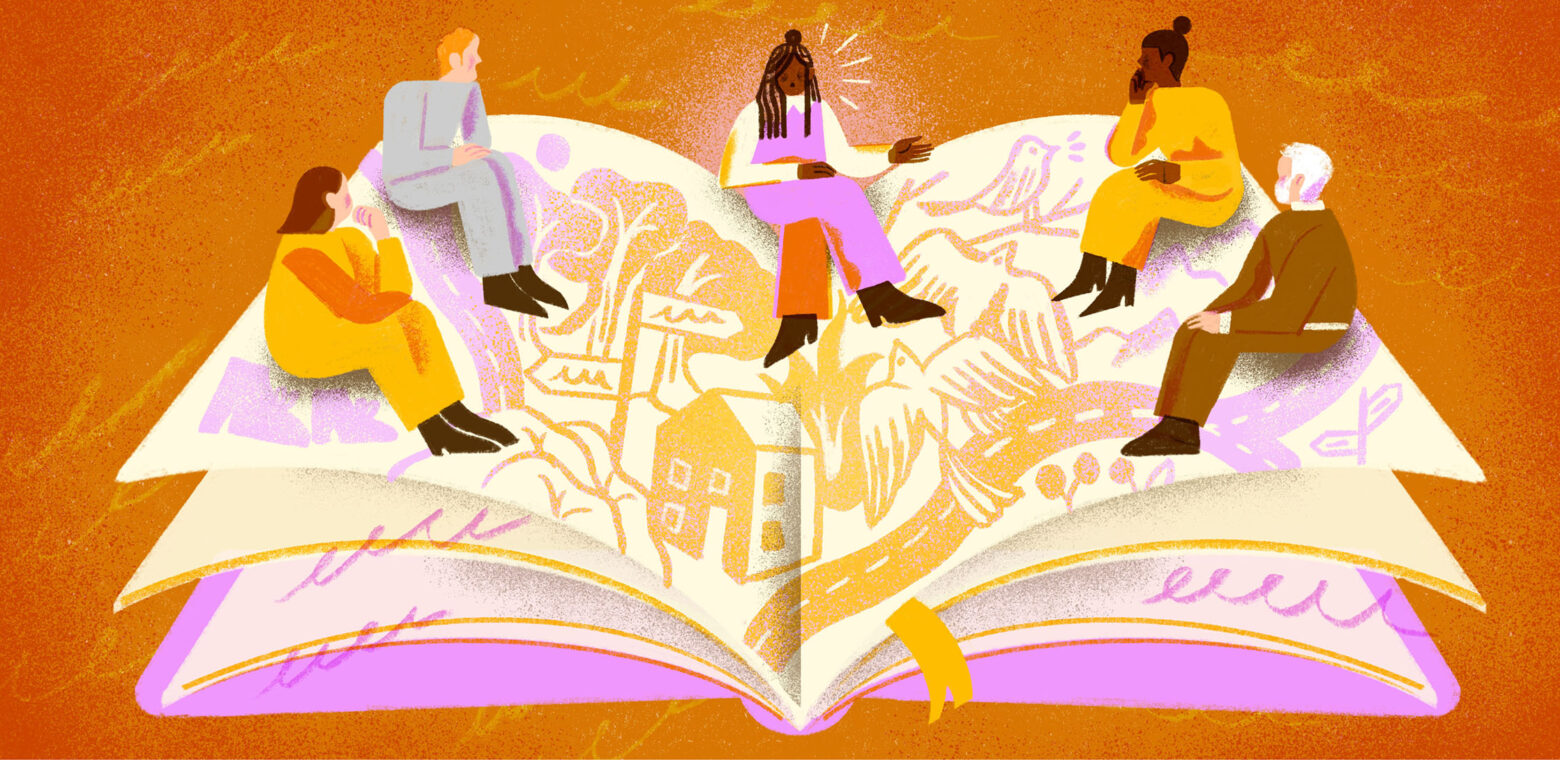


Our very first gathering centered around banned books. I wheeled in a full cart of titles from the Top 10 Challenged list, and what unfolded was magical. Each person had a personal connection to a book on that cart. I read this in high school. I found this during a difficult time in my life and it comforted me. This was my favorite story growing up. What began as a discussion of censorship quickly became a circle of memories, reflections, and laughter.

As we talked, connections emerged. I could see it wasn't just between people and books, it was clearly between multiple generations sharing stories that are valuable and meaningful. We found ourselves reflecting on how stories shape identity, comfort us in hard times, and offer perspectives that sometimes scare the world enough to be challenged. We realized that among all of our collective memories there are many stories worth telling.

That day, this new group bonded. We decided to meet monthly and share stories, memories, and carry on oral traditions. Family, holidays, ghosts, places we grew up, the conversations all just flowed naturally, weaving together threads of lived experience that transcended beyond anyone's age or background. The ages spanned from teens to seasoned adults. 


Looking back now, I see that what began as the end of one group became the beginning of a new kind of community. Just like Djo’s song End of Beginning, we found our group in another version and we were in it. We were definitely in it. All we needed was a space to talk, to listen, and to honor the stories that connect us across generations. It was so amazing!

Sometimes, when writing fades, storytelling finds its voice and I want to give tribute to this group for bringing back the art of storytelling and preservation the tradition of oral history. 


Until next time,

the Compassionate Librarian

Tuesday, August 26, 2025

Building Bridges, Sharing Voices: Lessons in Generational Communication 💙🌍🌟💚

I just wrapped up teaching a brand new course I designed for ALA eLearning Solutions called Bridging the Gap: Communicating Across Generations in the Library Workplace, and I have to say it turned out to be such a meaningful learning experience. Not only for my wonderful participants, but also for me.

As the instructor, I went into it excited to share resources, activities, and creative frameworks I’ve been developing for many years now, but what really made the course so special was the participants. These very brave souls who signed up and committed to a six-week course right in the middle of summer. Their insights, stories, and willingness to dive in made each week richer and more meaningful than I could have ever asked for.


I also grew so much from the process of creating the content itself. Designing activities, pulling together research, and finding fun ways to connect communication theory with real library life gave me new perspectives on a subject I thought I already knew well. Teaching always reminds me that learning is a two-way street. I thought it might be nice to share some of my favorite ideas and takeaways from the course here on the Compassionate Librarian blog. So, I'll be sharing some of my favorite communication tools with  you. Think of it as a series that will have you excited about practicing communication and will also help you through work generational gaps as well. 

I can’t wait to keep the conversation going.

Here's to learning together,

the Compassionate Librarian

Sunday, June 22, 2025

Mindful Communication in the Library Workplace


The modern library is a unique ecosystem. It's rich with stories, resources, and people of all ages. One of its greatest strengths? The diversity of its workforce. Today’s library staff might include members of at least five different generations—all working under one roof. With such a broad mix of perspectives, experiences, and communication styles, it’s no surprise that misunderstandings might happen, but with mindful communication it doesn't have to. Mindful communication offers us a way to pause, listen, and connect more intentionally so that no matter your generation or role, you feel seen, heard, valued, and understood.

What Is Mindful Communication?

Mindful communication means slowing down and being fully present in your conversations. It’s about listening without interrupting, choosing words with care, and approaching each interaction with empathy and curiosity—not judgment.

In a busy library environment, this might look like:

  • Giving a colleague your full attention when they’re speaking—even during a hectic reference desk shift.

  • Asking clarifying questions instead of making assumptions.

  • Noticing your tone, body language, and timing (are you interrupting someone’s break or piling on when they’re overwhelmed?).

The Generational Landscape in Libraries

Libraries are one of the few places where five generations often work side by side. Here’s a quick snapshot of some generational tendencies:

  • Silent Generation (born before 1946): May value hierarchy, loyalty, and face-to-face communication.

  • Baby Boomers (1946–1964): Tend to prefer direct conversation, phone calls, and formal structure.

  • Gen X (1965–1980): Known for independence, pragmatism, and a preference for email or text-based communication.

  • Millennials (1981–1996): Often collaborative, tech-savvy, and value feedback and flexibility.

  • Gen Z (1997–2012): Grew up with digital communication and value authenticity, inclusivity, and rapid responsiveness.

These are generalizations, of course, but they can help us to understand why a simple email or staff meeting might land differently depending on who's in the room.

Why Generational Communication Gaps Matter

Miscommunication isn’t always about tone or intent, it’s can often be about expectations. Someone who is good at texting that has a question might expect an immediate answer to, while someone else might wait for the next team meeting to bring it up. Others might prefer to work things out on their own and not in a group, and a few might be looking for team projects.

If we don’t pause to understand these dynamics, we risk frustration, misinterpretation, and fractured teamwork. With awareness and intention, we can build bridges to improve mindful communication.


Tips for Practicing Mindful Speaking

1. Pause Before You Respond: Give yourself a moment to reflect before reacting, especially when you're annoyed, confused, or caught off guard. A thoughtful pause can prevent defensiveness and open the door to curiosity.

2. Practice Active Listening: That means no interrupting, eye contact when possible, and affirming statements like “I hear you” or “Thank you for sharing that.”

3. Be Aware of Your Emotions: Before engaging in a tough conversation or responding to a frustrating situation, check in with yourself. Are you tired, overwhelmed, or feeling triggered? Emotional self-awareness helps you respond thoughtfully rather than react impulsively. A moment of self-reflection can prevent a small issue from escalating.

4. Use Reflective Statements: Show that you’re truly listening by reflecting back what you’ve heard. Phrases like “It sounds like you’re feeling frustrated because the shift schedule changed” or “What I’m hearing is that you’d like more support during busy hours—did I get that right?” help build trust and clarify understanding.

7. Celebrate Our Differences
We all bring something valuable to the library: resilience, innovation, mentorship, fresh ideas. Instead of viewing differences as a negative, we should consider our differences to be our team’s superpower!


Final Thoughts

Mindful communication isn’t about perfection, it’s more about thoughtful intention. When we take the time to connect with curiosity instead of assumption, we create a culture where everyone feels respected. In the end, that’s what libraries are all about: making space for every staff person's opinion and voice. 


Until next time, keep listening with empathy, speaking with care, and making your library a place where every generation feels at home.
💛 the Compassionate Librarian


The Library Manager Files - Case of the Clogged Pipes

  The Library Manager Files File #1: The Case of the Clogged Pipes 📁 File #1 Case Name: The Case of the Clogged Pipes Location: Public...